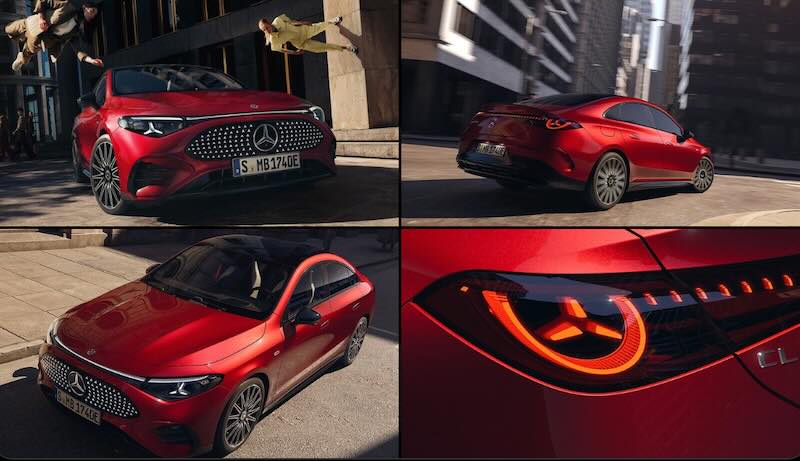
Mercedes-Benz CLA represents a significant shift in how automakers approach advanced driver assistance systems. Unlike previous generations that relied on piecemeal solutions from multiple suppliers, this vehicle integrates NVIDIA’s complete technology stack, from cloud infrastructure to in-car computing. System demonstrates that L2++ capabilities can now reach production vehicles with genuine real-world applications.
Mercedes-Benz CLA employs what NVIDIA calls a full-stack approach, though the term barely captures the scope of this implementation. Training happens on large-scale GPU clusters in the cloud. Simulation and validation utilize NVIDIA Omniverse alongside the Cosmos world model. In-vehicle hardware consists of Drive-series components, specifically, a pure-vision setup running on a single Orin chip—, paired with NVIDIA’s operating system and driving models.
This vertical integration eliminates the compatibility issues that typically plague systems assembled from disparate vendors. Every component speaks the same language, so to speak, because they all originate from the same source.
What makes the Mercedes-Benz CLA system noteworthy isn’t just the urban driving scenarios shown in early footage. NVIDIA’s solution encompasses active safety systems and parking ADAS as well. Wu Xinzhou’s team developed these features, marking his first major deliverable since joining NVIDIA.
System doesn’t stop at getting drivers from location A to location B. It handles the unglamorous but essential tasks—parallel parking, collision avoidance, lane-keeping in complex traffic patterns—that determine whether advanced systems actually get used or ignored.
Mercedes-Benz made an interesting decision for the Chinese market. Rather than deploying NVIDIA’s solution globally, the company selected Momenta to supply the intelligent driving system for CLA models sold in China. Creates a natural experiment in automated driving approaches.
The U.S.-market Mercedes-Benz CLA enters production in Q1 2026 with NVIDIA’s AlpaMayo model, a VLA architecture. Meanwhile, Chinese customers will experience Momenta’s interpretation of similar capabilities. Parallel deployment offers valuable insights into how different technical philosophies perform under real-world conditions.
Comparisons with Tesla’s FSD have already begun circulating online, which seems inevitable given the competitive landscape. However, Mercedes-Benz CLA approaches the problem with NVIDIA’s silicon running the show, a distinct technical foundation that warrants evaluation on its own merits.
Related Post
NVIDIA Alpamayo-R1 Rewires Driver-Assistance Logic with Chain of Causation
Mercedes-Benz all-new CLA: Revolutionary 800V EV System Delivers 492-Mile Range
Mercedes Unveils Revolutionary Steer-by-Wire System with Yoke Wheel Coming 2026