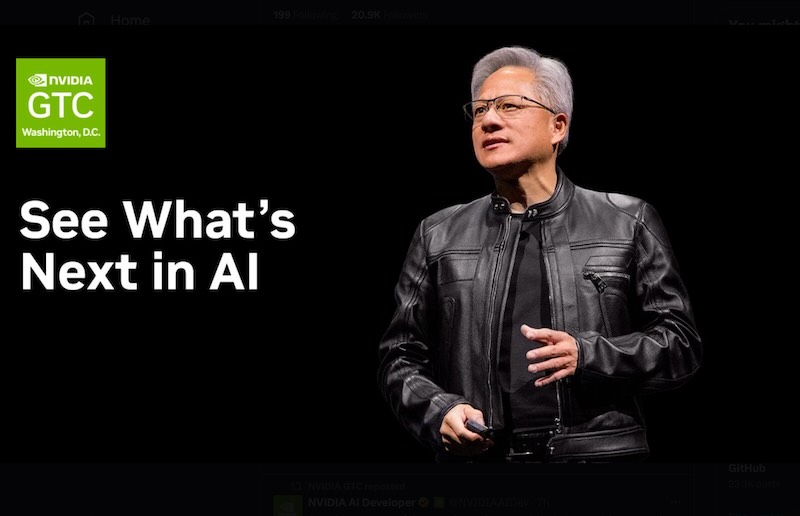
NVIDIA dropped a significant announcement this week, Alpamayo, what CEO Jensen Huang describes as the world’s first thinking, reasoning autonomous vehicle AI. Launches on U.S. roads later this year, starting with the Mercedes CLA. Marks NVIDIA’s aggressive push into autonomous driving territory, setting up a direct confrontation with Tesla’s Full Self-Driving technology.
Alpamayo introduces Vision-Language-Action models to self-driving systems. VLA models interpret visual data, reason through complex driving scenarios, and generate appropriate driving actions. Jensen explained the system’s capabilities: “It’s trained end-to-end. Literally from camera in to actuation out; It reasons what action it is about to take, the reason by which it came about that action, and the trajectory.”
10-billion-parameter architecture processes video input to generate trajectories alongside reasoning traces. Approach exposes the logic behind each decision, addressing long-standing concerns about transparency in autonomous systems. Developers can adapt Alpamayo R1 into smaller runtime models for vehicle development or leverage it as a foundation for AV development tools, including reasoning-based evaluators and auto-labeling systems.
NVIDIA provides open model weights and open-source inferencing scripts with Alpamayo R1. Platform includes simulation tools for testing rare and edge-case scenarios, plus open datasets for training and validation. Future models in the family will feature larger parameter counts, more detailed reasoning capabilities, and additional input and output flexibility. Commercial usage options are coming.
Elon Musk responded to the NVIDIA Alpamayo announcement with characteristic directness: “Well that’s just exactly what Tesla is doing, what they will find is that it’s easy to get to 99% and then super hard to solve the long tail of the distribution.”
Tesla currently deploys a smaller reasoning model in FSD. Plans to integrate a full-scale reasoning model in FSD v14.3, expected in Q1 2026.
NVIDIA also unveiled its Rubin chips, delivering 5X more performance than Blackwell predecessors. Chips are already in production. Huang showcased a Rubin pod containing 1,152 GPUs across 16 racks, with each rack housing 72 Rubins.
Elon tempered expectations, stating: “It will take another 9 months or so before the hardware is operational at scale and the software works well.” The road ahead determines who masters the long tail of autonomous driving challenges.
Related Post
Nvidia Partners with Palantir and Uber on AI Infrastructure for Autonomous Driving
NVIDIA DRIVE AGX Thor Developer Kit: Pre-Orders Open for September Shipping
Nvidia Partners with GM on Self-Driving Tech, Unveils Groundbreaking Cosmos System