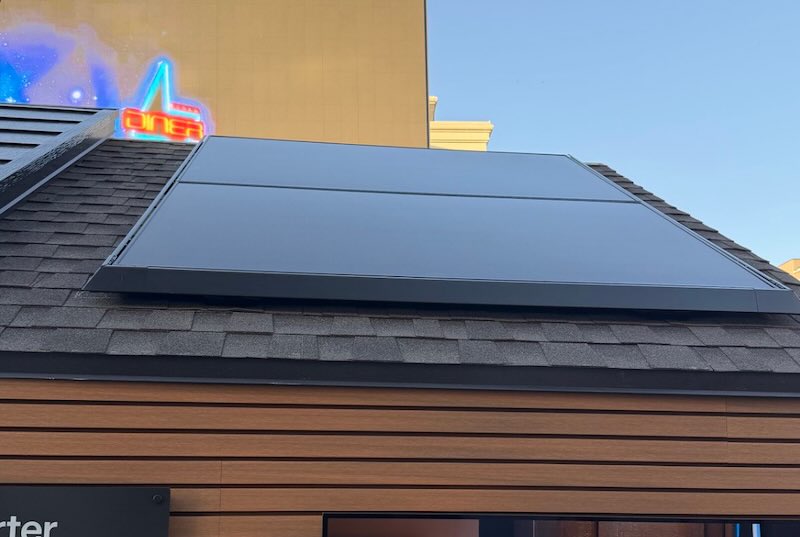
Tesla’s energy division has rolled out new solar panel technology alongside a reimagined mounting system. The company’s latest hardware arrives with performance upgrades and installation improvements that could reshape residential solar deployment timelines.
Updated solar panels feature an all-black aesthetic and sit noticeably closer to rooflines than previous versions. Power output has increased to 420W—a 10W bump from the prior generation—while physical dimensions have shrunk by three inches in both length and width. At 71.1″ x 44.7″ x 1.57″, the panels maintain a 49-pound weight profile with 20.5% module efficiency.
What’s particularly interesting here is Tesla’s integration of cascading cell technology borrowed from its Solar Roof product line. Panels now incorporate 18 discrete power zones—triple the count found in conventional solar panels. Architectural shift addresses a persistent challenge in residential solar: shaded conditions that typically drag down entire panel performance.
By creating multiple power zones within each Tesla solar panel, the system isolates underperforming sections rather than allowing shade on one corner to compromise energy generation across the entire surface. Matters especially for installations on roofs with chimneys, vents, or trees that cast partial shadows throughout the day.
Tesla’s new Panel Mount represents a departure from traditional rail-and-clamp configurations. Groove-based frame system promises 33% faster installation through streamlined assembly processes. Installation teams will also create up to 15% fewer roof penetrations—a change that maintains structural integrity while reducing potential leak points and lowering overall project costs.
Low-profile design works across shingle, tile, metal, and flat roof configurations, though compatibility depends on local building codes. Prospective buyers should verify requirements through Tesla’s official channels before committing to installations.
These hardware updates arrive as residential solar adoption continues expanding across North America. Tesla hasn’t disclosed pricing for the new solar panel and mounting hardware, though the company typically bundles components into complete system quotes rather than itemizing individual parts.
Question now is whether faster installation and improved shade performance will help Tesla gain ground in a competitive residential solar market that’s increasingly focused on total cost of ownership rather than upfront hardware specifications.
Related Post
Tesla 168-Stall Lost Hills Supercharger: World Largest Solar-Powered EV Station Coming 2025
Tesla Still in Development Powershare with Powerwall to Mid-2026
Tesla Master Plan Part 4: Optimus Robots Drive Sustainable Abundance Revolution