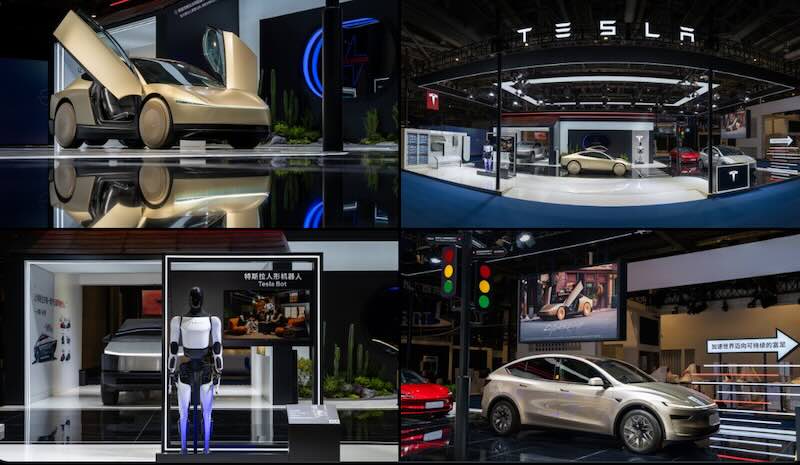
Tesla dropped its 2026 capital expenditure guidance at $20 billion, Q4 2025 earnings call, exceeding what the company spent in 2024 and 2025 combined. Shocking part? Almost none of that money targets traditional passenger vehicles. Instead, the budget spreads across six factories: battery materials refining, lithium iron phosphate production, CyberCab manufacturing, Semi truck assembly, Mega energy storage, and Optimus humanoid robot production. Allocation telegraphs where value creation has shifted in automotive technology.
Here’s the thing, nobody actually wants to own a metal box with four wheels. What customers pay for is transportation: getting from point A to point B safely, conveniently, and efficiently. Vehicle itself represents just the delivery mechanism. Once you accept that premise, the entire cost structure of automotive manufacturing starts to make sense differently.
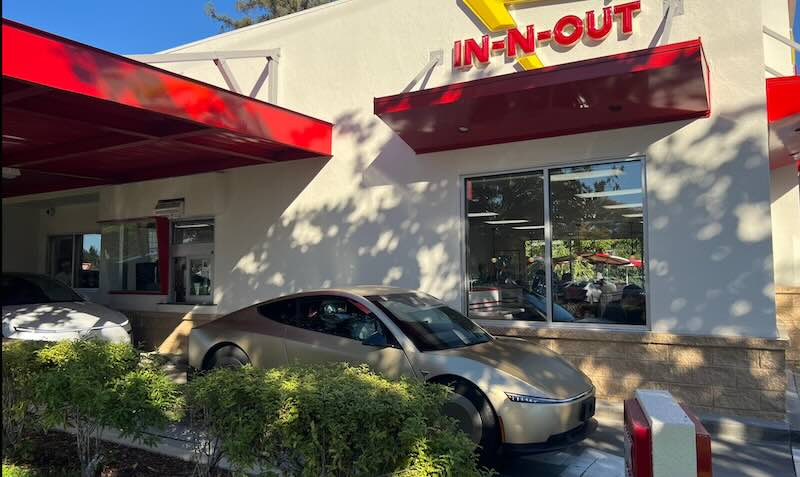
Value ceiling for any vehicle connects directly to how effectively it delivers transportation services. A car sitting in a driveway 22 hours per day generates zero value during that time. Owner still paid full price for the hardware, yet utilization remains stuck at roughly 5-10%. Autonomous vehicles flip this equation. Without safety drivers or human intervention, a Robotaxi can theoretically operate 20 hours daily, spreading fixed costs across 3-10 times more miles. That’s not incremental improvement, it’s structural disruption.
Internal combustion engines took a century to improve from 10% efficiency to 40%. Electric motors already exceed 95% efficiency. Battery technology continues advancing, but cost curves decline slowly compared to computing hardware. Chassis tuning, lightweight materials, and powertrain optimization still matter, but they’re approaching commodity status.
Think about smartphones. Nobody chooses an iPhone based on the aluminum frame quality. Frame just needs to be good enough. Differentiation lives entirely in the processor, camera algorithms, and software experience. Automotive technology is following the same trajectory. “Body” has become standardized, “brain” determines winners and losers.
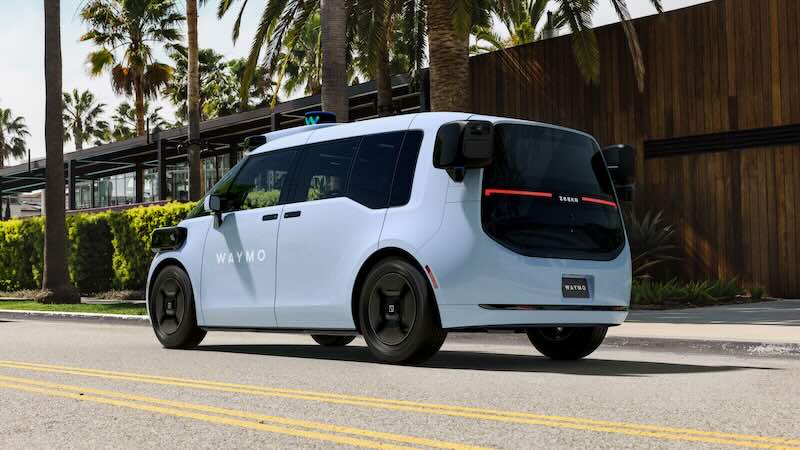
Early Robotaxi platforms demonstrated this shift clearly. Sensors and computing hardware consumed 25-40% of a single vehicle’s bill of materials. Multiple LiDAR units, combined with Orin-class or Thor-class processors, pushed component costs higher than traditional automotive electronics. Waymo’s 6-gen Robotaxi Van Ojai reduced the sensor count from 29 cameras and 5 LiDAR units to 13 cameras, 4 LiDAR units, and 6 radar units. Cost dropped substantially while safety performance held steady.
Tesla’s vision-only approach using end-to-end neural networks reduces hardware expenses further. However, the company’s Dojo-scale supercomputer (Tesla Restarts Dojo 3) training infrastructure and AI capital expenditure has reached tens of billions of dollars. For a CyberCab targeting sub-$30k pricing, mechanical systems get squeezed to absolute minimums. Computing-related elements—processing platforms, sensor fusion, drive-by-wire redundancy, high-precision localization, still claim 40-50% of the total bill of materials even as absolute costs decline.
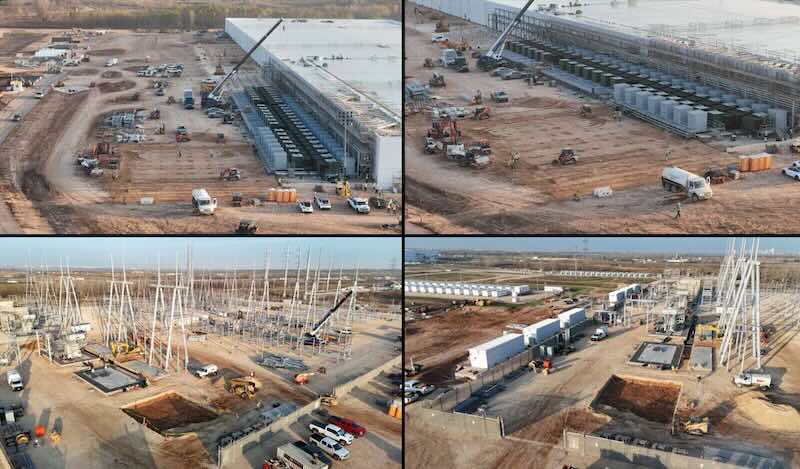
Research and development spending tells the real story. Algorithm development, data infrastructure, and compute clusters now dwarf traditional mechanical engineering budgets. Among leading manufacturers planning 2026 capital expenditures, 30-50% flows directly into AI clusters. Tesla’s $20 billion budget for 2026 concentrates on CyberCab factories, AI infrastructure, Optimus development, and training compute. Under the Cortex 2 plan, H100-equivalent capacity is scheduled to double in the first half of the year.
This reallocation isn’t optional when total investment remains capped. Resources naturally concentrate on the highest-leverage components. If Robotaxi bills of materials need to stay within $20k-40k range, a target multiple companies have cited publicly, then compute-driven elements consume whatever remains after mechanical, battery, and body systems take their 50-60% share.
Moore’s Law and architectural innovation keep pushing compute and storage costs downward. Pace has slowed somewhat after 2025, but still runs significantly faster than mechanical system cost reductions. LiDAR, 4D millimeter-wave radar, and camera costs have halved multiple times and continue commoditizing. What remains scarce and therefore valuable is data quality, model architecture, training compute, and closed-loop iteration speed. All of these concentrate in the computing domain.
Geopolitical factors accelerate this trend. Supply chain security for battery materials and semiconductor manufacturing has become a strategic priority. Tesla’s $20 billion budget addresses these concerns by building refining capacity and factory infrastructure simultaneously across multiple product categories.
Competition over the next decade will fundamentally measure “compute per unit cost of transportation per kilometer.” Companies that efficiently convert resources into stronger autonomous systems—rather than more expensive vehicle shells—position themselves to win at scale in mobility services. Mechanical platform just needs to meet safety standards and reliability thresholds. Everything above that baseline represents wasted capital.
This explains why Tesla’s $20 billion budget almost completely ignores traditional passenger cars. The company has made its calculation: incremental improvements to Model 3 or Model Y platforms won’t determine market position in 2030. Whoever achieves reliable, scalable, fully autonomous operations will reshape the entire industry. Capability requires massive investment in computing infrastructure, not better cupholders.
Automotive industry has spent more than a century refining the metal and machinery. Turns out, the future belongs to whoever builds the better brain, and Tesla’s $20 billion budget proves they’re betting everything on exactly that.
Related Post
Tesla FSD Hits 1.1M Users as Subscription Model Takes Over, 120 EFLOPS of Compute Power
Tesla Launches FSD Unsupervised Robotaxi Service General Public in Austin with no Safety Monitors
Tesla FSD Drives Coast-to-Coast Without Human Intervention, Full Story