
Jensen Huang faced direct scrutiny from financial analysts at NVIDIA GTC in San Jose this week regarding the company’s autonomous driving division. The segment currently represents just 1% of NVIDIA’s total revenue, prompting questions about resource allocation and long-term viability. Huang’s response traced a pattern across NVIDIA’s history: technologies that initially generated zero returns but eventually transformed entire industries.
Jensen referenced CUDA as a case study in patient capital deployment. The parallel computing platform once consumed 90% of NVIDIA’s costs while producing no revenue whatsoever. Conventional business logic would have terminated the project, yet NVIDIA continued funding development. Decision now underpins the company’s dominance in AI acceleration and data center computing.
Programmable shaders followed a similar trajectory 26-years ago. Industry consensus rejected the technology as unnecessary and commercially unviable. NVIDIA proceeded anyway, establishing the foundation for modern graphics rendering. Ray tracing technology faced comparable skepticism 9-years ago when Jensen introduced RTX. Critics dismissed real-time ray tracing as computationally impractical, yet the technology now enables full-scene path tracing in current applications.
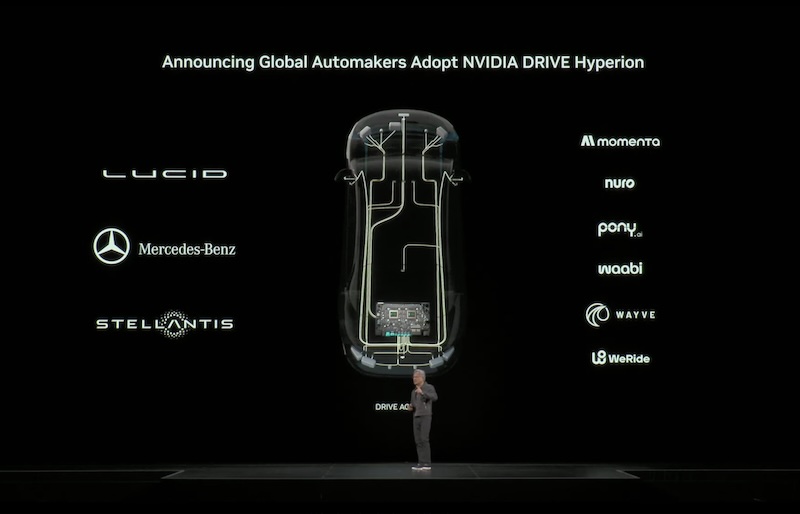
1% revenue figure reflects only in-vehicle autonomous systems, Jensen explained. NVIDIA’s autonomous driving business actually spans three distinct computing platforms: training infrastructure, synthetic data generation with simulation environments, and vehicle-based systems. Financial reporting categorizes only the final segment as automotive revenue, creating measurement distortion.
Tesla deploys NVIDIA systems for neural network training. Wayve and virtually every autonomous vehicle manufacturer, including robotaxi operators, commercial trucking companies, and delivery van fleets, purchase one or more platform components from NVIDIA. Jensen characterized the current business as already substantial when accounting for all three segments rather than isolated automotive hardware sales.
Jensen stated that autonomous driving represents a solved problem at the technical level after ten years of development. Remaining work involves engineering refinement rather than fundamental breakthroughs. His projection: nearly all of the one trillion miles driven globally each day will be autonomous within ten years.
Current mileage totals face artificial constraints from human driver requirements. Removing that limitation enables dramatic expansion in total miles traveled. Jensen’s scenario envisions two trillion daily miles at several dollars per mile, creating a market worth tens of trillions annually. Markets at that scale typically originate from zero revenue, making current performance irrelevant to long-term conviction.
Whether NVIDIA’s autonomous driving bet matches the success of CUDA, programmable shaders, and RTX remains uncertain. However, the company’s track record suggests patience with technologies that require years before generating returns, even when those investments appear irrational by conventional metrics.
Related Post
Nvidia Autonomous Vehicle Revolution: Uber, Mercedes, Space Chips
NVIDIA Alpamayo vs Tesla FSD: Development Kit Can’t Challenge Production Leader
Mercedes-Benz CLA Gets NVIDIA Full-Stack L2++ Autonomous Driving System