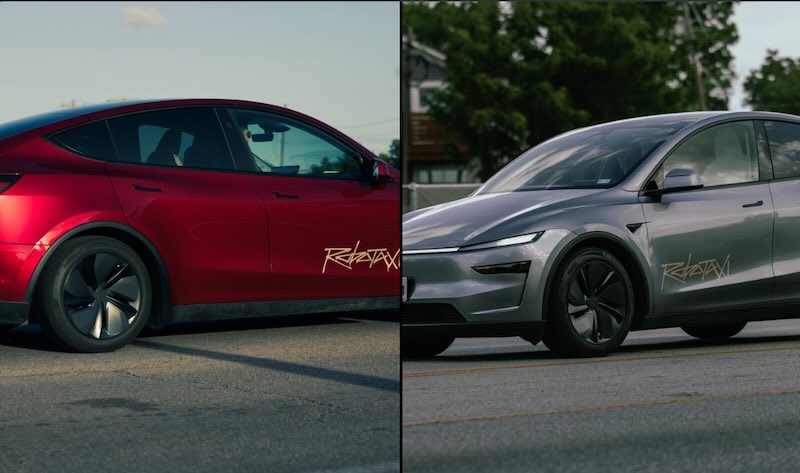
Tesla has cleared a critical regulatory hurdle in Nevada, receiving its Autonomous Vehicle Network Company (AVNC) permit from the Nevada Transportation Authority, specific commercial license required to operate a paid robotaxi service in the state. It’s a meaningful milestone, though the permit’s fine print makes clear that Las Vegas won’t wake up tomorrow to a fleet of driverless Teslas. Approval is structured, conditional, and deliberately restrained.
Nevada Transportation Authority isn’t handing over a blank check. Tesla is authorized to operate a maximum fleet of 10 fully autonomous vehicles, and those vehicles must remain within Authority-approved Operational Design Domains, defined geographic zones where the system has been validated to perform safely. Any expansion of that geofence, including changes to mapping or operating parameters, requires prior Authority approval.
Operationally, the constraints go further. Passenger transport is prohibited on Nevada roadways with posted speed limits above 45 miles per hour. Every vehicle must be marked as “Robotaxi,” and riders must be notified before each trip that they’re traveling in a driverless autonomous vehicle. Human supervision must remain in place in accordance with SAE standards and applicable federal and state law. Pickups are also prohibited at or within a quarter mile of Harry Reid International Airport unless the airport operator and all required governmental authorities have signed off. Tesla must additionally report to the Authority within five working days any accident, security incident, system failure, or event that renders a Robotaxi disabled on a Nevada roadway.
That fleet ceiling of 10 vehicles is a regulatory starting point, not a business ceiling, a standard structure Nevada uses to bring new autonomous operators online in a controlled, observable way before expanding scope. More commercially consequential milestone is that Tesla has now crossed from testing-only status into the commercial operator category.
Tesla had originally applied for authorization to deploy up to 5k vehicles during the first year after permit approval, with the filing covering Clark County, including Harry Reid International Airport and Henderson Executive Airport. For context, Zoox — which holds the only other AVNC permit in Nevada — operates under a cap of just 65 vehicles in Las Vegas under a free-rides-only temporary authorization and has carried more than 350,000 riders while logging approximately two million autonomous miles.
Tesla is not opening a frontier here. It’s walking into a market where well-funded rivals already run vehicles on the same streets. What distinguishes Tesla’s approach, though, is the degree of vertical integration, the company manufactures the vehicles, develops the Full Self-Driving stack, and now holds the commercial operating license. Whether that model accelerates iteration or concentrates operational risk is precisely what the Las Vegas pilot will begin to reveal.
Tesla also filed a separate permit with Clark County on May 12, 2026, for a 36,000-square-foot Cybercab maintenance and car wash facility — which signals the company was already building physical infrastructure in the market weeks before the commercial filing surfaced.
The permit marks Tesla’s entry into the Nevada market on regulators’ terms — measured, monitored, and expandable only through demonstrated performance. For a company that’s been talking about autonomous ride-hailing at scale for years, this is where the Tesla Autonomous Vehicle Network Company permit stops being a promise and starts being a proof. Road to robotaxi dominance, it turns out, begins with just 10 cars — and the Nevada Transportation Authority holding the keys.
Related Post
Tesla Robotaxi Vertical Integration Advantage: What a Turn Signal Update Reveals
Tesla Cybercab Robotaxi First Responders Guide: What the Docs Reveal
Tesla Robotaxi Launches Unsupervised Rides in Dallas and Houston — Expansion Incoming