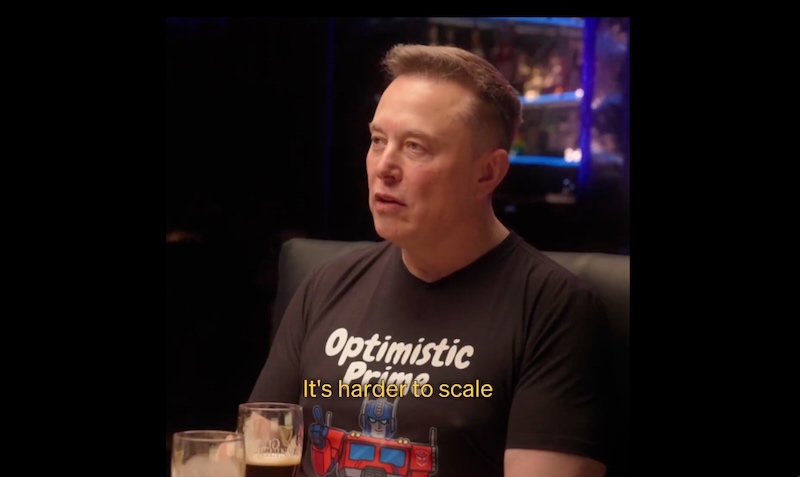
Elon Musk thinks the next frontier for artificial intelligence isn’t somewhere on Earth—it’s above it. During a new podcast with AI podcaster Dwarkesh Patel and Stripe co-founder John Collison, Elon laid out his rationale for why SpaceX acquired xAI and why he believes space will become the dominant environment for AI compute within three years. While only a teaser has been released, conversation reveals a strategy that hinges on physics, economics, and the fundamental limits of terrestrial infrastructure.
Today, the FCC has accepted SpaceX’s application (FCC fast-tracks SpaceX million-satellite plan) to deploy up to 1 million satellites for orbital data centers, launching a public comment period that ends March 6.
According to Elon, solar panels deployed in orbit generate approximately 5 times more power than their Earth-based counterparts. That gap becomes even wider when accounting for energy storage. On Earth, solar installations require batteries to maintain operation during nighttime hours. In space, solar arrays can operate continuously without interruption, effectively doubling their advantage. Result is a tenfold improvement in cost-efficiency per unit of energy generated.
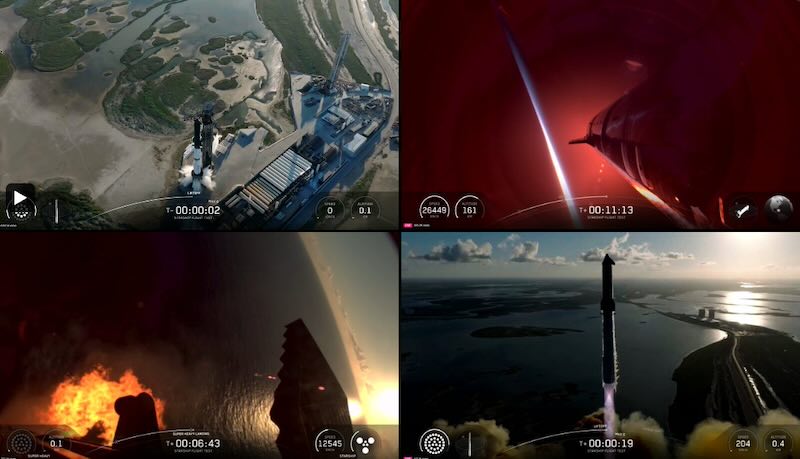
“Mark my words, in 36 months, probably closer to 30 months, the most economically compelling place to put AI will be in space. Those who have lived in software land don’t realize that they’re about to have a hard lesson in hardware.” Elon said during the podcast. He didn’t hedge the statement. He called it a certainty.
Timeline is aggressive. But Elon argues the constraints facing terrestrial data centers are becoming too severe to ignore. United States currently consumes about 0.5 terawatts of power on average. Deploying an additional terawatt for AI infrastructure would require doubling the country’s electricity generation capacity. Means constructing new power plants, expanding grid infrastructure, and negotiating complex interconnection agreements with utility providers, a process that can take years and billions of dollars.
Elon pointed to a disconnect between software developers and the physical world. “People who have lived purely in the software world are about to run into a hard truth from the hardware world: building power plants is extremely difficult,” he said. Problem isn’t just generating electricity. It’s the transformers, transmission lines, and regulatory approvals that come with large-scale energy projects.
xAI is addressing this by building its own power plants. But Elon acknowledged that scaling remains a challenge. Solar panels, already cheap at $0.25 to $0.30 per watt in China, become dramatically more cost-effective in orbit. Without the need for batteries and with higher energy output per panel, economics shift decisively in favor of space-based deployment.
Catch has always been launch costs. However, as SpaceX continues to reduce the cost of getting mass into orbit, the equation changes. “Once the cost of getting mass into orbit comes down, space becomes, without question, the cheapest and most scalable way to generate tokens,” Elon said. He predicted that within five years, the total amount of AI operating in space will exceed what’s running on Earth.
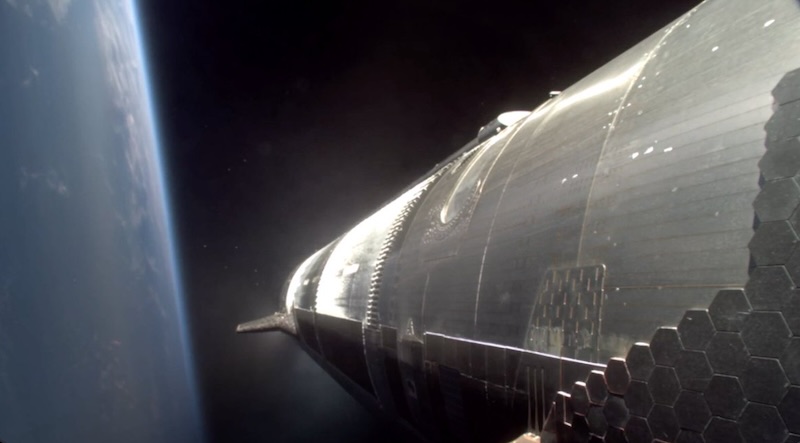
Moving AI compute to space introduces engineering challenges. Chips need higher radiation tolerance and must operate at elevated temperatures. Elon argued that higher temperatures are actually advantageous in orbit. Increasing operating temperature by 20% in Kelvin terms allows radiator mass to be cut in half, reducing launch weight and cost.
Memory can be shielded, and neural networks themselves are resilient to bit flips caused by radiation. “If you’re dealing with a model that has tens of trillions of parameters, a handful of bit flips simply doesn’t matter,” Elon explained. Redundancy inherent in large-scale AI models provides built-in error tolerance that makes space deployment more feasible than it might appear.
Elon also raised a less obvious problem: chip manufacturing may soon outpace deployment capacity. “By the end of this year, I think chip manufacturing capacity may actually exceed the ability to deploy and power those chips,” he said. Companies could find themselves with warehouses full of GPUs they can’t turn on because the necessary power infrastructure doesn’t exist.
That mismatch creates an opening for space-based compute. If chips are manufactured faster than they can be deployed on Earth, orbit becomes an increasingly attractive destination. Prediction isn’t just about energy, it’s about where the next wave of AI infrastructure can realistically be built.
Whether or not Elon’s 36-month timeline proves accurate, the underlying thesis is difficult to dismiss. As AI demands more power and Earth-based infrastructure strains under the load, xAI may be positioning itself at the intersection of two industries that have never been more aligned: aerospace and AI. Race to scale AI is heading into space.
Related Post
xAI Colossus 2 1GW Supercomputer is Now Online, Scaling to 1.5GW by April
xAI Buys 5 Natural Gas Turbines to Power 600K+ GPU Cluster
Elon Musk Officially Confirmed SpaceX 2026 IPO to Fund Orbital Data Centers