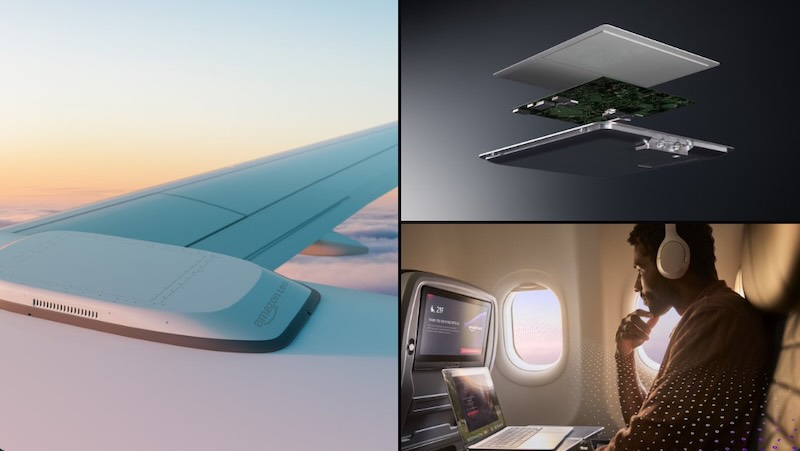
The race for in-flight connectivity just got more competitive. Amazon has officially unveiled its Amazon Leo Aviation Antenna, a flat, low-profile satellite dish engineered specifically for commercial aircraft. Designed to connect an entire plane’s worth of passengers and crew, it’s a direct shot across the bow at SpaceX’s Starlink Aero Terminal, timing couldn’t be more deliberate.
At 58 inches long, 30 inches wide, and just 2.6 inches high, the antenna is remarkably slim for what it promises to deliver. It has no moving parts, a notable engineering decision that reduces wear, lowers maintenance overhead, and simplifies the certification process airlines dread. Installation, Amazon claims, can be completed in a single day.
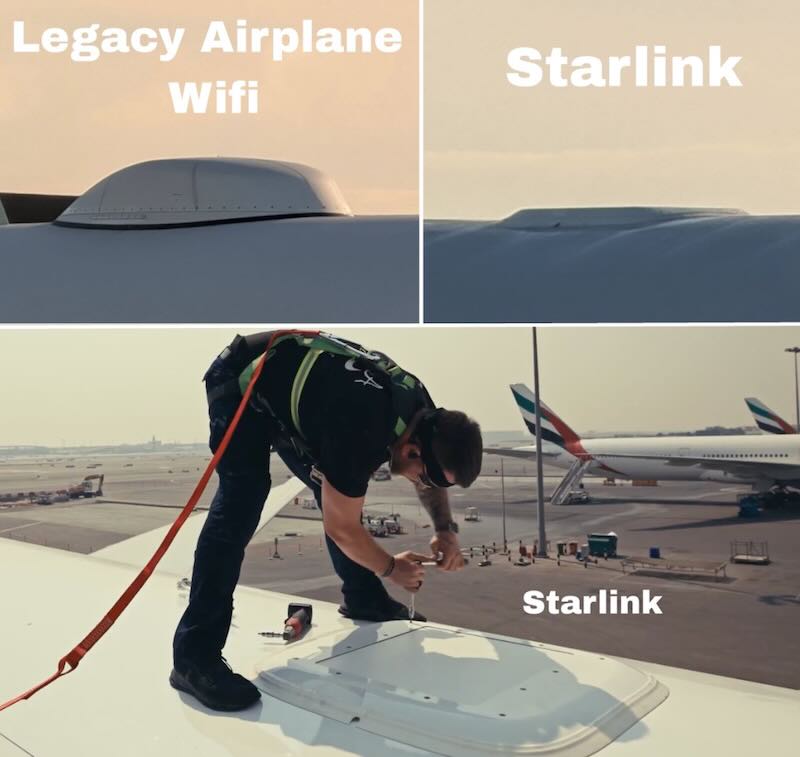
That last point is a direct jab at Starlink. SpaceX’s Aero Terminal requires 10 to 14 days of downtime for installation, which translates to real revenue loss for carriers. One day versus two weeks? That’s a commercial argument airlines will find hard to ignore.
Amazon Leo aviation antenna is rated for up to 1 Gbps downloads and 400 Mbps uploads simultaneously. Shared bandwidth, yes — but Amazon’s position is that the pipe is wide enough that segmentation becomes an airline’s choice rather than a necessity.
Trevor Vieweg, Amazon Leo’s director of global business, put it plainly: passengers should expect speeds fast enough to game, stream, and collaborate without friction. He went further, suggesting travelers will actively seek out flights featuring Leo connectivity. That’s a bold commercial thesis, but the specs support the ambition.
Installed on the exterior airframe using aviation-grade connectors, the antenna ties directly into aircraft power and interior communication systems, a clean integration that avoids retrofitting nightmares.
Where Amazon Leo stands right now, here’s the honest picture: Amazon Leo has momentum on paper, but it’s still catching up operationally. Service remains in private beta, with only around 240 satellites currently in orbit — well below the threshold for consistent global coverage.
Delta and JetBlue have both signed on as launch partners, which is significant. Delta’s passengers won’t see Leo connectivity until 2028, however, and JetBlue’s rollout is targeted for 2027. Both carriers plan to offer the service free of charge, with Delta tying access to its loyalty program sign-up.
Amazon’s own target for commercial launch is mid-2026, by which point it expects roughly 700 satellites in orbit. Getting there hasn’t been smooth — launch delays have already prompted Amazon to request a deadline extension from the FCC. Starlink, meanwhile, is already live on United Airlines, Alaska Airlines, and Air France.
Amazon Leo Aviation Antenna is a credible product with real airline backing. Now Amazon just needs the sky to cooperate — because without the satellites to match the specs, this antenna can only fly so high.
Related Post
Virgin Atlantic Launches Starlink Wi-Fi in May, Airbus A350-1000 Will be First Aircraft
SpaceX Slams American Airlines Over Amazon Leo Talks, Starlink vs Leo Satellite Internet Battle
Amazon Leo Satellite Internet Takes On Starlink With Three New Terminals, Launch Details