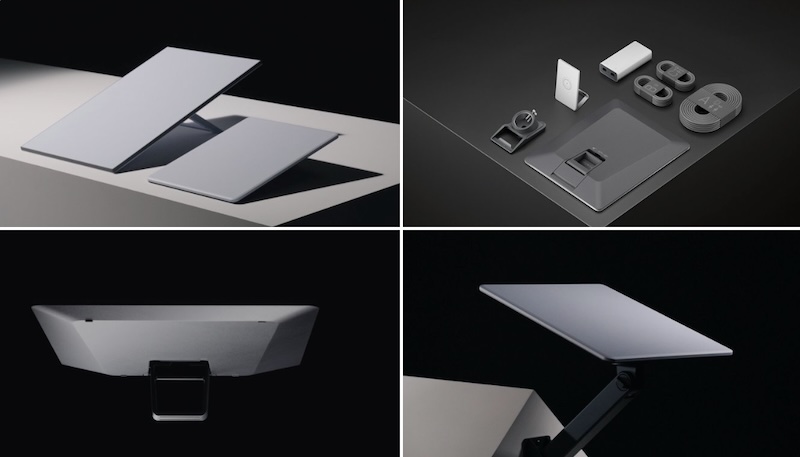
SpaceX didn’t just iterate on its Starlink hardware with the new V5 terminal — it rethought the product from the ground up. Officially unveiled on July 15, Starlink V5 terminal arrives as a smaller, lighter, and substantially more power-efficient unit, yet it delivers every bit of the performance users have come to expect from the V4 dish. This isn’t a modest spec bump. It’s a hard engineering reset, and the numbers make that unmistakably clear.
Customers began receiving their V5 units, which means real-world feedback is already trickling in. What stands out immediately, even before the first speed test, is the hardware’s footprint. Starlink V5 Terminal is 48% smaller by surface area and 62% lighter than its predecessor — a dish that now weighs just 2.4 pounds. For context, the V4 felt like something you’d mount with both hands and a decent amount of planning. V5 feels closer to something you’d toss in the back of a truck without a second thought.
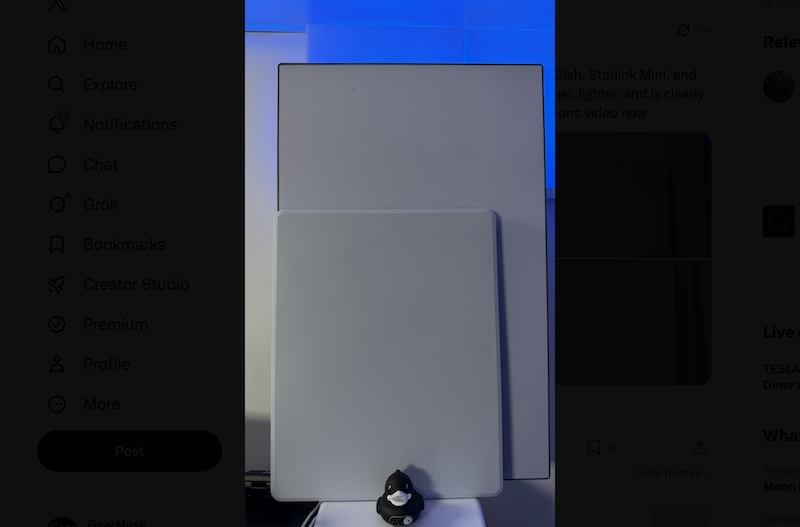
So how did SpaceX get there? V5 dish achieves a 35% reduction in dish size while holding onto the same 110° field of view and IP67 Type 4 weather resistance rating that V4 users already trusted. That’s not a trade-off — that’s an engineering win. The unit also maintains snow-melt capability of up to 40mm per hour and can handle operating temperatures ranging from -30°C to 50°C. Nothing was sacrificed to get the form factor down.
Wind resistance actually improved. Starlink V5 Terminal is rated for operational wind resistance up to 165 mph, compared to the 60 mph-plus rating on the V4. That matters enormously for customers in hurricane-prone regions, high-altitude installations, or anyone mounting the dish somewhere exposed. That’s a genuine safety upgrade baked into a smaller chassis.
Here’s where the V5 makes its most compelling argument: power consumption. V5 draws an average of just 35 to 50 watts — representing a 50% improvement in power efficiency over V4. For residential users, that’s a meaningful reduction in operating costs over time. For off-grid users running solar or battery systems, it’s potentially transformative. Ability to sustain reliable satellite internet on a smaller power budget opens the door to deployments that weren’t viable before.
Speeds reach 375+ Mbps, which holds up competitively against the V4 and keeps Starlink V5 Terminal squarely in the conversation for users who need real throughput, not just connectivity. The dish also integrates an LED status indicator directly into the unit — a departure from V4, which pushed that function to the router. It’s a small UX change, but a logical one.
V5 ships with a notably capable networking package. Included Router Mini supports Wi-Fi 6 with dual-band 2×2 MU-MIMO and covers up to 2,200 square feet. Two 1 Gbps RJ45 Ethernet ports add wired flexibility, and the system supports up to 235 connected devices. That’s a serious ceiling for a device at this scale.
Mesh compatibility extends across Starlink’s current router lineup: the Gen 2 Router, Gen 3 Router, Router Mini, and Starlink Mini. Cable inclusions are generous — a 15-meter Starlink cable, a 2-meter Ethernet cable, and a 1.5-meter power cable. A pipe adapter, power supply, Router Mini stand, and kickstand round out the package. There’s nothing particularly minimal about the accessory kit, which is a good sign for users who want flexibility in mounting and configuration from day one.
Software-assisted manual orientation feature carries over from V4, keeping the setup process familiar for existing Starlink subscribers upgrading their hardware.
V5 terminal doesn’t exist in isolation. It’s a data point about where SpaceX is taking the Starlink hardware roadmap. Engineering discipline on display here — maintaining or improving key performance metrics while dramatically cutting size, weight, and power draw — sets a visible precedent. Observers in the satellite internet space are already pointing toward the Starlink Mini as the natural candidate for a similar treatment. A 50% smaller, 50% more power-efficient Mini with USB-C power delivery and optional battery support would represent a genuinely backpack-portable internet node. That’s not a feature request — that’s a product category.
Whether SpaceX pursues that path on its current development cycle remains to be seen. But V5 proves the capability exists to push the hardware envelope without compromising the service reliability that Starlink has built its reputation on.
There’s no ambiguity here. Starlink V5 Terminal delivers better hardware at lower weight, lower power consumption, and equal or better capability compared to what came before it. 165 mph wind rating alone is worth flagging for any installation in a demanding environment. Included Router Mini with Wi-Fi 6 and 235-device support isn’t a checkbox — it’s a genuinely useful networking kit that most users won’t outgrow quickly.
For new subscribers, V5 is an easy choice. For V4 users weighing an upgrade, the power efficiency gains and wind resistance improvement will likely be the deciding factors depending on how and where the dish is deployed.
Related Post
SpaceX Unveils AI Satellites, New Starlink Terminals & Terafab Factory Plans
SpaceX Closes Starlink Reseller Program Applications Amid Compliance Concerns and IPO Prep
SpaceX Starship V3: Every Change, Explained Ahead of the May 19 Launch