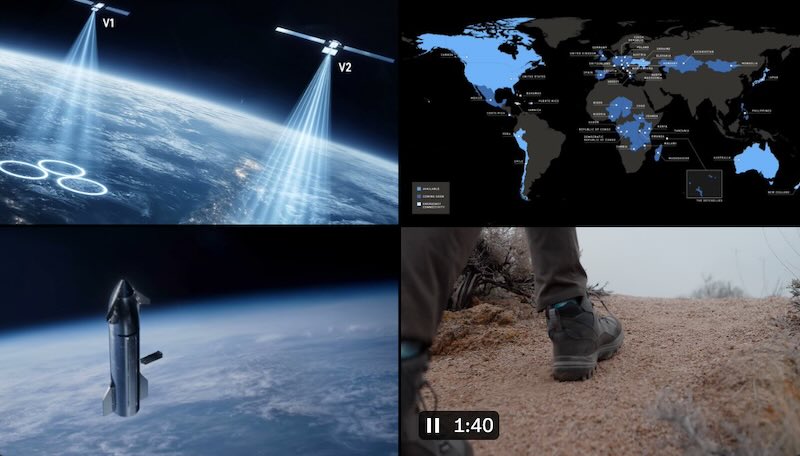
SpaceX has offered a fresh look at its plans for Starlink Mobile, and the numbers involved are worth paying attention to. According to a filing sent to Canadian regulators, direct-to-device network could eventually operate thousands of satellites, with an upper limit as high as 15,000. That’s a dramatic jump from where the constellation stands right now, and it signals just how aggressively SpaceX intends to scale its phone-to-satellite ambitions over the next couple of years.
The filing, submitted to Innovation, Science and Economic Development Canada, doesn’t read like a marketing pitch. Instead, it lays out a fairly detailed roadmap covering satellite counts, service timelines, and the technical hurdles standing between SpaceX and full global coverage. For anyone tracking the direct-to-device space, this document gives one of the clearest pictures yet of where Starlink Mobile is headed.
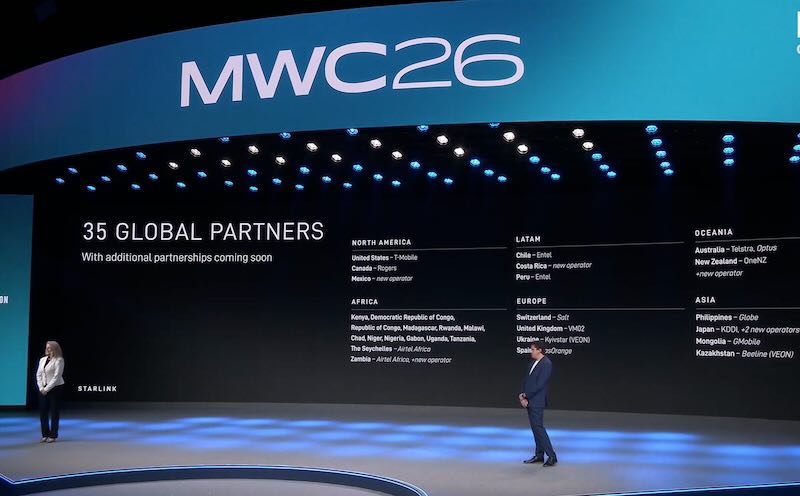
Right now, Starlink Mobile spans about 650 satellites, enabling it to beam mobile data and text messaging to phones in cellular dead zones. That’s already a meaningful footprint, but SpaceX isn’t treating it as a finish line. The company’s Canadian filing describes a much larger second-gen network waiting in the wings, one that would dwarf the current setup several times over.
Next major goal is to upgrade it with a second-generation constellation that could span up to 15k satellites, pending approval from the US Federal Communications Commission. That regulatory dependency matters. Even with Starship ready to fly and manufacturing lines humming, SpaceX still needs the FCC’s sign-off before it can legally deploy a network of that scale. Approval timelines for satellite constellations aren’t always predictable, so this remains the biggest wildcard in the entire plan.
As for when service actually begins, SpaceX pointed to a fairly specific window. SpaceX estimates that it will begin launching its next-generation Starlink direct-to-device satellites with service beginning by late 2027, which aligns with earlier comments on timing. That’s a tight turnaround for a project involving thousands of new satellites, but SpaceX has leaned on rapid launch cadence before to hit ambitious targets.
A written paragraph on infrastructure helps explain why this timeline isn’t pure guesswork. To roll out the constellation quickly, SpaceX is banking on the upcoming Starship vehicle, a heavy-lift rocket that can carry a larger payload but remains in testing. Starship’s development has faced delays in the past, so its readiness will directly influence whether Starlink Mobile hits its 2027 and 2028 milestones or slips behind schedule.
Beyond satellite counts, the filing gets specific about what kind of service SpaceX expects to deliver and when. Life-saving data capabilities are set to arrive first, with voice communication following not long after. SpaceX added that Starlink Mobile will be able to provide its partners with life-saving data services by Q3 2027, with voice following within months. That phased rollout suggests SpaceX is prioritizing emergency and safety use cases before expanding into broader consumer voice calling.
Speed upgrades are also part of the equation. All of these upgrades will be possible thanks to the company’s next-generation Starlink Mobile V2 satellites, which will deliver 5G speeds from space with 100x the data density of the current V1 gen satellites. That density improvement isn’t a minor spec bump. It’s the kind of leap that would let Starlink Mobile handle far more simultaneous users without straining network capacity, particularly in remote regions where terrestrial towers simply don’t exist.
By the time the full rollout wraps up, SpaceX wants Starlink Mobile to claim a coverage advantage no competitor currently offers. SpaceX says that by the end of 2028, Starlink Mobile will have already rapidly upgraded the constellation by launching thousands more satellites, providing continuous full global coverage to become the first, and most likely the only, direct-to-device provider to offer true coverage in high-latitude polar regions, according to a new filing. Polar coverage is a genuinely difficult problem for satellite networks, so this claim, if it holds up, would set Starlink Mobile apart from rivals like AST SpaceMobile and Amazon-Globalstar.
Hardware compatibility remains a separate challenge, though. Phones need updated chipsets to actually take advantage of these upgrades, and SpaceX has acknowledged this directly in its communications with manufacturers. Progress on that front appears to be moving forward, but widespread adoption will still depend on how quickly companies like Apple, Samsung, and Google integrate the necessary radio bands into upcoming devices.
None of this happens in a vacuum, either. Competing companies are pursuing similar ambitions, and spectrum acquisition remains a contested battleground across the industry. SpaceX’s EchoStar spectrum deal, along with its Starship development timeline, will likely determine whether Starlink Mobile’s 2027 and 2028 targets hold steady or shift further down the road.
For now, the filing gives a rare, unfiltered look at how SpaceX plans to expand its satellite footprint. Whether Starlink Mobile lives up to its own projections will depend on regulatory approval, launch cadence, and how fast the smartphone industry catches up.
Related Post
SpaceX Starlink Mobile Gen 2: 150Mbps Speeds from Space Coming Mid-2027
SpaceX Gains 65 MHz for Starlink Mobile — But a $2.4B Escrow Condition Has EchoStar Pushing Back
AT&T, T-Mobile and Verizon Form Joint Venture to Counter SpaceX Starlink Mobile