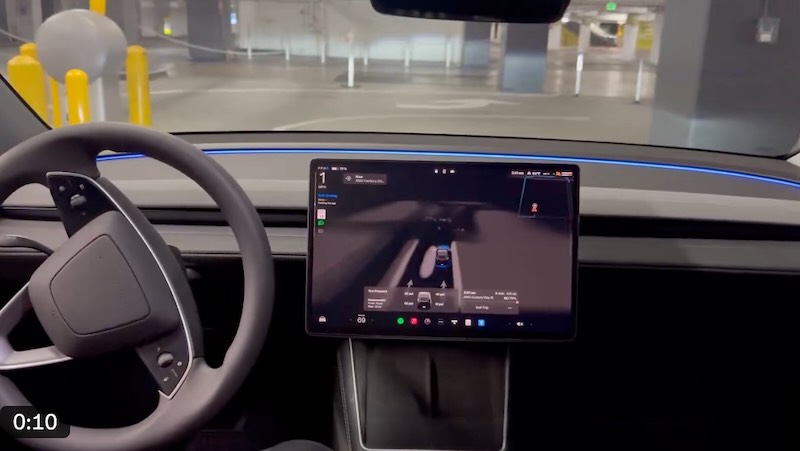
The autonomous driving world is asking a pointed question right now: does Tesla’s Full Self-Driving model actually have an external safety fallback system? It’s not a trivial concern. Most legacy AV architectures lean on separate, rule-based safety modules sitting outside the core AI — an added layer of protection in case the model fails. Tesla, it turns out, isn’t doing that. And their reasoning is worth unpacking.
Tesla AI Engineering Director Phil Duan addressed this directly at CVPR 2026, and the answer reframes what “safety” means in the context of modern AI-driven autonomy.
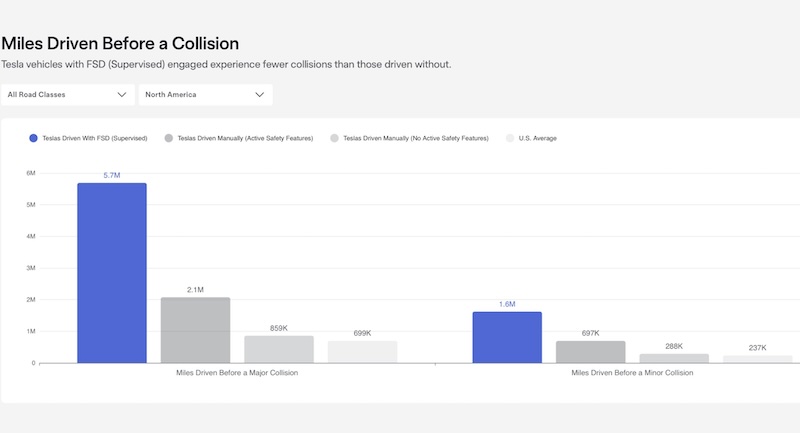
Rather than appending a conventional safety module to the model’s output, Tesla is embedding collision avoidance directly into the training process through reinforcement learning. Collision detection functions as an objective reward signal, which Duan noted makes optimization “relatively straightforward” during training. Deployment, then, relies primarily on this internalized mechanism — validated through what Tesla describes as rigorous testing protocols.
This is a meaningful architectural divergence. Traditional AV systems treat safety as a guardrail; Tesla is treating it as a learned behavior. Whether that bet pays off at scale remains the central question for regulators and consumers alike.
Data advantage behind does Tesla FSD have a safety fallback system? You can’t train a model like this without data, Tesla has it in quantities that are genuinely difficult to contextualize. A typical internal dataset used for FSD training and evaluation exceeds 100 petabytes, equivalent to more than 120 years of driving data. At that volume, off-the-shelf data processing tools don’t cut it. Tesla has built its own optimization systems to handle the I/O throughput demands these datasets require.
This infrastructure investment reflects a deliberate strategy: accumulate a data advantage so large that it compounds over time.
Duan also outlined Tesla’s internal compute philosophy at CVPR 2026, and it’s striking. Principle: keep the engineering team lean and focused, while scaling compute resources aggressively. Individual Tesla engineers can reportedly access thousands of GPUs internally — a ratio Duan suggested is among the highest in the industry.
That philosophy is showing up in the numbers. Tesla’s AI compute capacity stood at approximately 140 EFLOPS when Duan gave his presentation. Within several months, that figure reportedly climbed to 280 EFLOPS — a full doubling. If team headcount didn’t scale proportionally, each engineer effectively gained twice the computing firepower.
The pattern here is consistent: Tesla isn’t building safety through redundancy. It’s building it through scale — more data, more compute, and a model trained to internalize the judgment calls that other systems delegate to external logic.
Does Tesla FSD Have a Safety Fallback System? Technically, no — but Tesla’s position is that the model is the fallback. Whether the industry agrees is a conversation that’s only getting started. In the end, Tesla’s biggest safety net might just be its own Full Self-Driving conviction.
Related Post
Elon Musk: Tesla FSD Will Finally Learn Your Driving Habits
Autonomous Driving AI Is Learning to Think — Here’s What That Actually Means
Tesla FSD Hits 10 Billion Miles: What’s Driving the Subscriber Surge in 2026