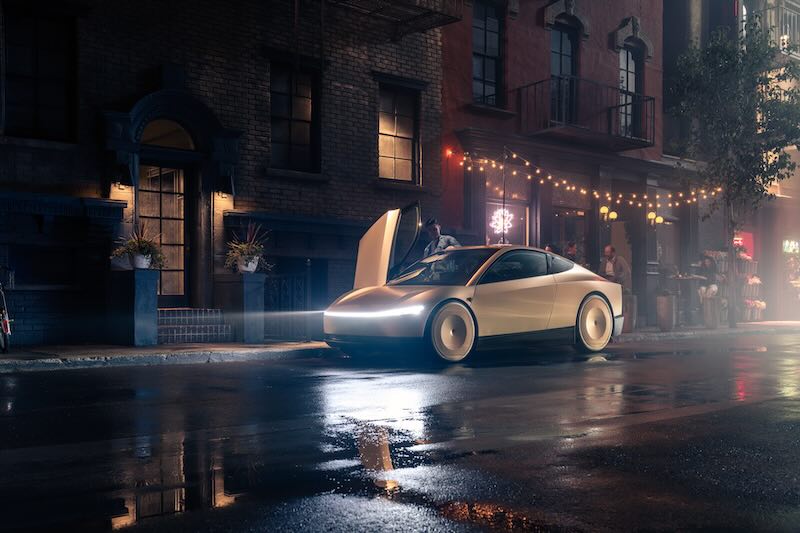
Tesla has confirmed that Cybercab manufacturing will commence in April 2026, marking a significant shift in autonomous vehicle development. The company released footage of the final assembly line, revealing a vehicle that operates without a steering wheel or pedals—components traditionally considered essential for automotive design.
Cybercab production line demonstrates Tesla’s manufacturing capabilities. Each unit will roll off the assembly line every 10 seconds, which represents a notable improvement over the Model Y production rate of 35 seconds per vehicle at the Shanghai facility. Efficiency stems from what Tesla calls their “unboxed manufacturing process,” a method that streamlines assembly operations and reduces production time.
April 2026 timeline positions Tesla to deliver autonomous vehicles at scale, though the company hasn’t disclosed initial production volumes or pricing details.
Tesla’s autonomous ride-hailing service will expand beyond its current markets in Austin, Texas, and the San Francisco Bay Area. Tesla Robotaxi plans to launch operations in Nevada, Florida, and Arizona before year-end. Specifically, Miami, Dallas, Phoenix, and Las Vegas will receive the Robotaxi service as part of this expansion phase.
Perhaps most notably, Tesla intends to remove safety drivers from vehicles operating in Austin by the end of the year. Represents a transition toward fully autonomous operations without human oversight in the driver’s seat.
Recent images reveal production-ready interior modifications for the Cybercab, spotted at In-N-Out. Changes include redesigned door cards with new trim and ambient lighting, an open slit across the dashboard that appears to accommodate air vents, and an updated roof and headliner configuration. The seating features upgraded bottom cushions, and the handle area has been redesigned.
Elon confirmed that both the Cybercab and Tesla Semi will utilize 4680 battery cells starting next year. Larger-format cells promise improved energy density and manufacturing efficiency compared to previous battery technologies.
Will Tesla meet its ambitious production timeline? automotive industry will be watching closely as the Cybercab moves from concept to reality, one might say it’s time to grab this opportunity by the Cybercab.
Related Post
Tesla Robotaxi Review: 69 Rides Reveal Surprising Strengths and Critical Gaps
Tesla Robotaxi Review: FSD v13+ with Remote Intervention – Real Test Results
Tesla vs Waymo: Kyle Vogt Explains the Real Robotaxi Divide That Matters Most