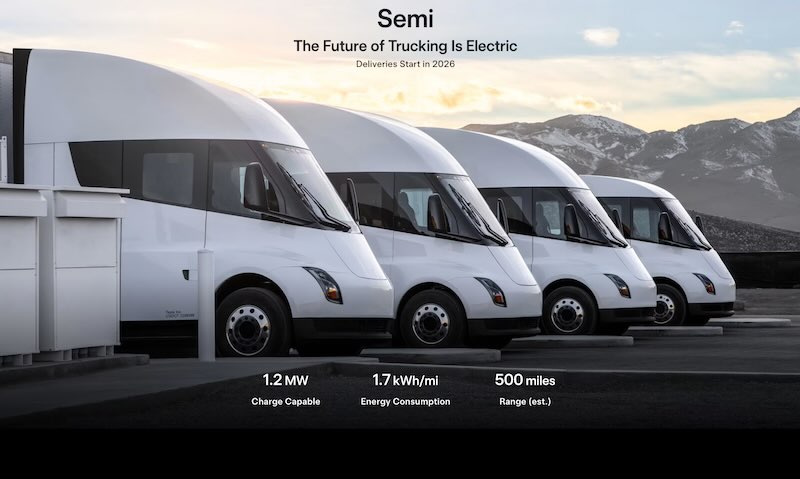
Tesla’s updated Semi truck webpage now displays production specifications for two distinct configurations, marking a shift from prototype demonstrations to commercial reality. Standard Range and Long Range variants reveal technical details that’ll shape the electric freight industry’s next phase.
Both configurations maintain the same 82,000-pound gross combination weight rating, yet they’re differentiated by battery capacity and vehicle mass. Standard Range model achieves 325 miles per charge while staying under 20,000 pounds curb weight. Meanwhile, Long Range version extends that to 500 miles but increases curb weight to 23,000 pounds.
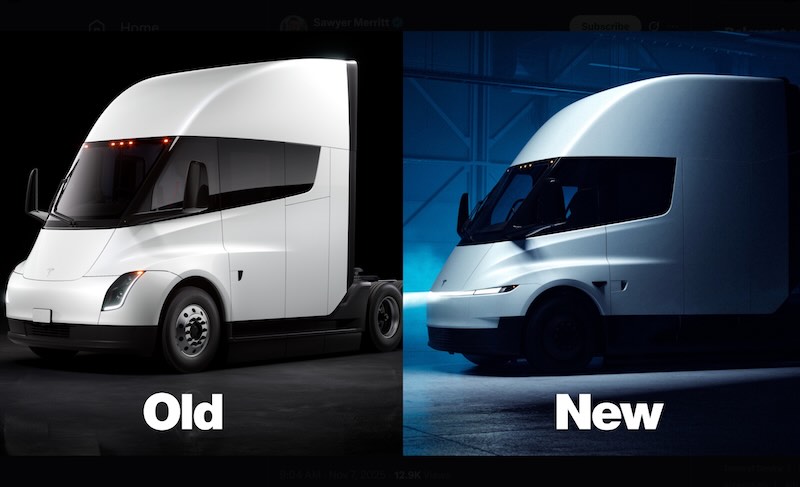
Each Tesla Semi relies on three independent motors mounted to the rear axles, delivering up to 800 kilowatts of drive power. Tri-motor arrangement provides redundancy, if one fails, the remaining motors can maintain operation.
Charging specifications present what’s probably the most significant development. Both trims support MCS 3.2 (Megawatt Charging System) standard, with the Long Range variant capable of accepting 1.2 megawatts, first SemiCharger launch: V4 superchargers & 1.2 MW power set for Carson, CA. That’s 1,200 kilowatts of peak charging capacity, allowing drivers to recover 60% of range in approximately 30 minutes.
Energy consumption sits at 1.7 kilowatt-hours per mile across both configurations, a figure that’ll determine operating costs for fleet managers evaluating total cost of ownership.
Beyond propulsion, the electric Power Take Off system provides up to 25 kilowatts for auxiliary equipment like refrigeration units or hydraulic systems. ePTO capability eliminates the need for separate diesel generators that refrigerated trailers traditionally require.
Both versions ship with hardware designed for autonomous operation, though Tesla hasn’t specified when self-driving features might activate or what regulatory approvals they’re pursuing.
Webpage update suggests deliveries aren’t far off, previous announcements indicated production would ramp throughout 2026. PepsiCo’s been operating early units since late 2022, but broader customer deliveries represent the Tesla Semi’s actual commercial test.
Whether the Standard Range or Long Range configuration proves more popular depends on route requirements and infrastructure availability. Either way, these aren’t concept specs anymore, they’re what customers will actually Semi.
Related Post
Pilot Travel Centers and Tesla Launch Semi Charger Network at 35 US Locations
Tesla Reveals Semi Truck Factory Progress and Official Logo
Move Over Gas Guzzlers, Pepsi Announced that they have taken Delivery of more Tesla Semi Trucks