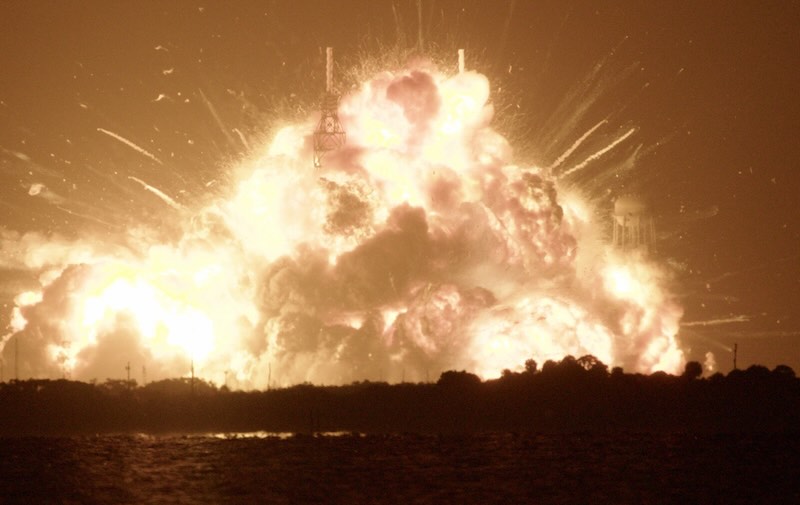
It was supposed to be a routine milestone. On May 28, 2026, Blue Origin’s New Glenn rocket stood at Launch Complex 36 in Cape Canaveral, primed for a static fire engine test ahead of a June 4 launch that would have pushed 48 Amazon Leo satellites into low-Earth orbit. That mission, designated NG-4, was the first of a 24-flight contract — the backbone of Amazon’s entire strategy to challenge Starlink’s dominance. Then, at 9 p.m. EDT, as its seven BE-4 first-stage engines appeared to ignite, something failed at the vehicle’s base. 188-foot first stage collapsed in flame. 87-foot upper stage tilted and fell. What followed was one of the largest on-pad explosions in recent American launch history.
Nobody was hurt — Blue Origin confirmed all personnel were safe within hours. But the damage to Amazon’s satellite broadband ambitions may take considerably longer to heal.
Rocket itself is replaceable, even if not quickly. Launch pad is another matter entirely. LC-36 is the only site on Earth from which New Glenn has ever flown, and it’s now seriously compromised. The explosion destroyed the vehicle’s erector-gantry and toppled a lightning protection tower, with early footage showing steel beams bent sharply inward from the blast force. Early estimates peg LC-36’s rebuild cost north of $1 billion, and industry observers tracking pad reconstruction timelines — including SpaceX’s own experience following a 2019 pad incident — suggest a recovery window of at least seven to twelve months, potentially longer.
That timeline isn’t just inconvenient. For Amazon Leo, it’s potentially existential. Amazon currently has somewhere between 210 and 241 satellites in orbit, against a Federal Communications Commission requirement of 1,618 operational satellites by July 30, 2026. Amazon had already filed a formal petition asking the FCC to extend that midpoint deadline to July 30, 2028, citing launch vehicle shortages and manufacturing bottlenecks well before this explosion occurred. Petition noted that Leo is “producing satellites considerably faster than others can launch them” — a logistical chokepoint that the NG-4 loss has now made dramatically worse.
The entire 24-launch New Glenn manifest is suspended. There is no resumption date.
It’s worth putting the scale of the gap in perspective. SpaceX’s Starlink has over 10,000 satellites in active orbit and more than 10 million subscribers globally. Amazon Leo, despite a disclosed program commitment exceeding $10 billion, entered enterprise beta only in April 2026 and is targeting commercial launch sometime this summer — a timeline that now looks optimistic.
NG-4 mission would have been a meaningful step forward, more than doubling Leo’s current constellation in a single flight. Amazon had been planning to densify its per-rocket payloads, targeting 48 satellites per New Glenn launch compared to the roughly 30 carried on earlier missions using United Launch Alliance’s Atlas V. ULA’s Atlas V launches remain unaffected by the explosion, and one was, in fact, scheduled to carry a batch of Leo satellites the very next night after the NG-4 incident. But Atlas V’s capacity and contracted cadence were never intended to carry the full weight of Leo’s build-out schedule — that burden was shared with New Glenn.
The loss of New Glenn also cascades beyond Leo. Blue Origin’s Blue Moon Mk1 lunar lander, contracted under NASA’s Commercial Lunar Payload Services program, is scheduled to fly on New Glenn this fall. Jeff Bezos is now the principal stakeholder in two major programs that depend on the same grounded rocket.
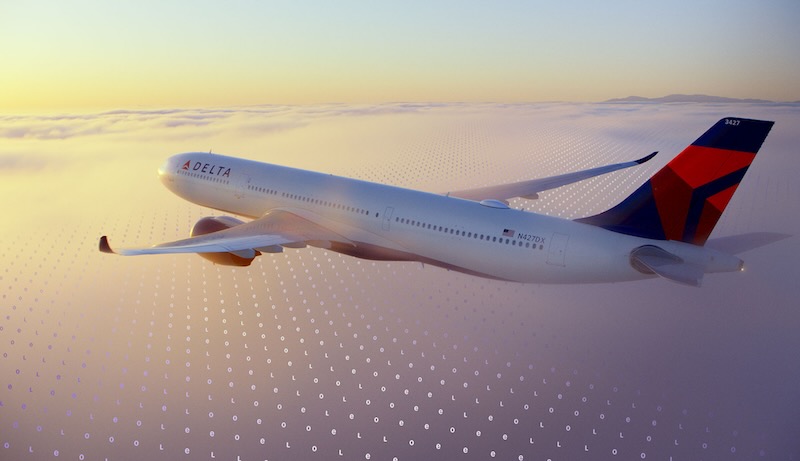
Delta Air Lines made a headline-generating call in March 2026, signing a deal to install Amazon Leo connectivity on 500 aircraft starting in 2028. The airline reportedly chose Leo over Starlink partly because of its existing relationship with Amazon Web Services — Delta runs significant internal infrastructure on AWS. Amazon CEO Andy Jassy described Leo as a “very important long-term business,” and the Delta deal gave the program its highest-profile aviation endorsement to date.
JetBlue had also committed earlier, planning to equip roughly a quarter of its fleet with Leo terminals starting in 2027, targeting completion by 2028.
The problem is that Delta’s competitors aren’t waiting. United Airlines has already fitted over 300 regional jets with Starlink and is targeting 80% of its fleet — approximately 880 aircraft — by the end of 2026. Southwest Airlines is aiming for Starlink on roughly 300 planes, or about 37% of its fleet, by December 2026. American Airlines is scheduled to begin Starlink installations in 2027. By the time Delta begins its first Leo installations, United could plausibly have Starlink on every aircraft it operates.
Travelers streaming Champions League finals on United’s retrofitted fleet have reportedly seen speeds between 135 and 310 Mbps, peaking above 450 Mbps. That’s the kind of real-world performance data that shapes passenger expectations. If connectivity increasingly factors into flight selection — and there’s growing evidence that it does — Delta’s delayed rollout carries a competitive cost that extends well beyond a press release.
Jeff Bezos responded quickly after the explosion, writing on X that Blue Origin would “rebuild whatever needs rebuilding and get back to flying,” adding: “It’s worth it.” That commitment is notable given the scale of the loss. What he didn’t specify was how long the rebuild will take, or what Amazon does in the interim.
One option Amazon has is launching additional Leo satellites on SpaceX’s Falcon 9. It’s a move that would carry obvious optics baggage — paying your closest rival to launch your satellites — but it’s also one Amazon reportedly took steps toward even before the NG-4 incident, having discussed supplemental Falcon 9 capacity as a hedge against its chronic launch shortage. Whether that arrangement scales enough to meaningfully close the FCC gap remains to be seen.
Investigation into the root cause is ongoing. There’s an additional concern: both New Glenn and United Launch Alliance’s Vulcan Centaur use Blue Origin’s BE-4 engines on their first stages. Vulcan Centaur was already grounded due to a separate solid rocket booster anomaly. If the BE-4 engine family is implicated in the New Glenn failure, the ripple effects could reach well beyond LC-36.
For now, Amazon Leo’s path to orbit runs through a damaged launch pad, a grounded rocket, an FCC deadline it can’t currently meet, and a competitor that keeps adding thousands of satellites per year. Bezos says it’s worth it. Launch schedule will determine whether that confidence has any orbital basis.
In the satellite internet race, Amazon Leo may have the orbit right — it just needs to get there first.
Related Post
Delta Rejects Starlink for Amazon Kuiper, Passengers Face Years-Long Wait for Slower WiFi
Amazon Project Kuiper Readies First Production Satellites for April 9 Launch
Amazon Leo Satellite Internet Takes On Starlink With Three New Terminals, Launch Details